
Upcoming Events
LocalStack is heading to The Cloud & AI Summit 2026, the community-driven conference for developers, architects, and technology leaders working with Azure and AI, running September 30 – October 2 at the Ameristar Casino & Convention Center in St. Charles, MO. Find our team to talk about local cloud development, faster Azure feedback loops, and giving every developer, AI agent, and pipeline a safe place to build and test. Then catch two sessions from Kiah Imani: one on fixing the Azure dev loop by running cloud architectures locally, and one on how developer experience needs to change now that AI agents are testing, debugging, and deploying code.
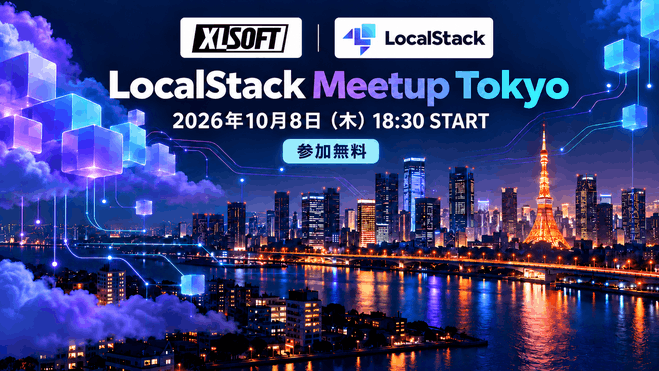
LocalStack co-founder and CTO Waldemar Hummer is coming to Tokyo. Join us on Thursday, October 8 for LocalStack Meetup Tokyo 2026, co-hosted with XLsoft, LocalStack's reseller partner in Japan, at the XLsoft Tokyo office in Mita, Minato-ku.
Developing on AWS shouldn't mean deploying to the cloud every time you want to see if something works. LocalStack lets you run AWS services on your own machine, so you can try out changes, run automated tests, and debug cloud applications without waiting on deployments or spending money on cloud resources.
At this meetup, Waldemar will talk about local AWS development and what it opens up for development with AI agents. Then LocalStack Champion Yoshiaki Yoshida (@kakakakakku) will share local cloud development patterns from a community perspective. Stay afterwards for networking with other developers and members of the AWS community.
Who should attend
- Developers building and testing applications on AWS
- Anyone who wants to develop locally instead of waiting on cloud deployments
- Teams looking to get more out of LocalStack
- Developers interested in building with AI agents
- Anyone who wants to meet other developers and the AWS community in Tokyo
Agenda
- Welcome and introduction to XLsoft
- AWS development in local environments: built for humans, ready for agents (Waldemar Hummer, Co-founder and CTO, LocalStack)
- Local cloud development patterns: a community perspective (Yoshiaki Yoshida, LocalStack Champion)
- Networking and social
Event details
- Date: Thursday, October 8, 2026, 18:30–20:30 JST (doors open 18:00)
- Venue: XLsoft Tokyo Office, Mita, Minato-ku, Tokyo
- Admission: Free, registration required
- Light food and drinks provided
Register for free on connpass. Content and agenda may change without notice.
LocalStack is heading to Web Unleashed 2026, FITC's front-end and web development conference in Toronto, running October 27–28 at Humber IGS. Stop by to talk local AWS development and cloud-native testing with our team, and catch our session on keeping AI coding agents safe and cost-effective in AWS serverless environments.
Have a talk idea?
Do you want to present at our events? We are not just limited to LocalStack—Talks around AWS, Developer Productivity, Cloud Security, DevOps toolings, Development & Testing loops, Snowflake and more would add great value to our members. Fill out the form to propose your talk at one of our Community Events
Previous Talks
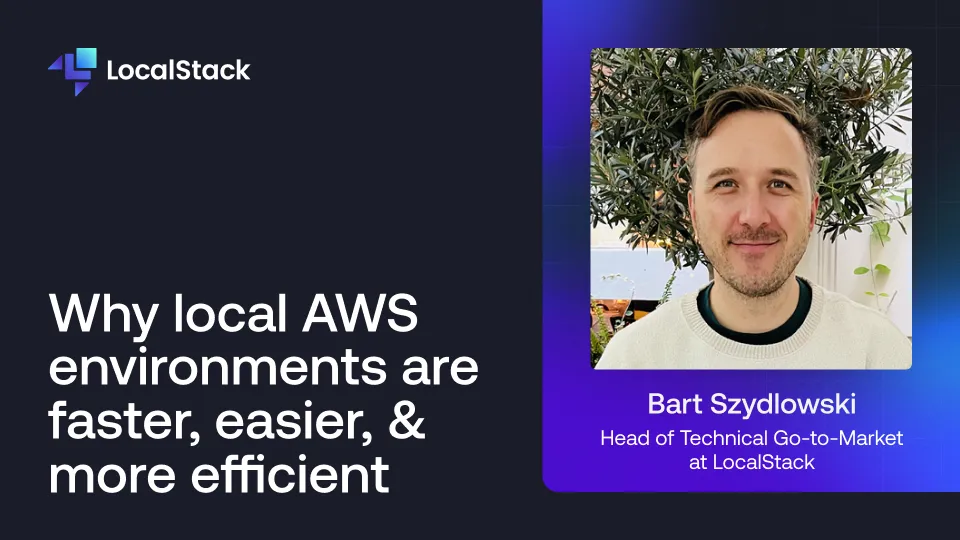
So many of the challenges that slow down software development stem from the fact that early-stage dev & test cycles are performed in cloud environments.
Local cloud development removes these challenges.
By simulating AWS application behavior in a local container, the local cloud enables developers and agents to validate the security, quality, and reliability of their applications faster and more effectively than they can on the cloud.
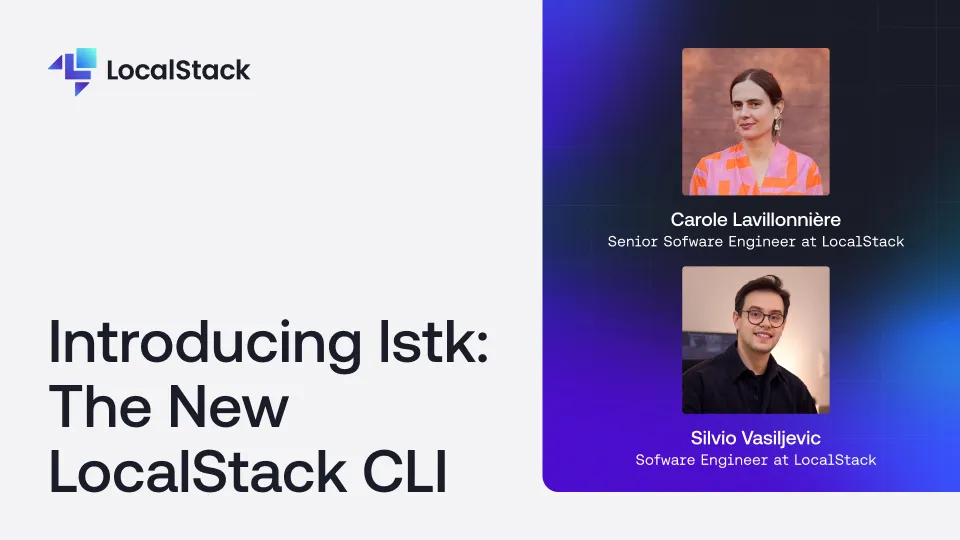
Silvio and Carole introduce lstk, LocalStack's next-generation CLI built from scratch in Go. They explain why the team rebuilt the CLI, walk through its key features — zero-config startup, seamless browser-based authentication, and a rich interactive TUI that surfaces real-time progress and actionable errors — and demo how lstk gets you from install to a running emulator in seconds. They also dive into the architecture behind lstk and how it is designed to support multiple emulators, flexible runtimes, and deep integrations with CI pipelines and IDEs.
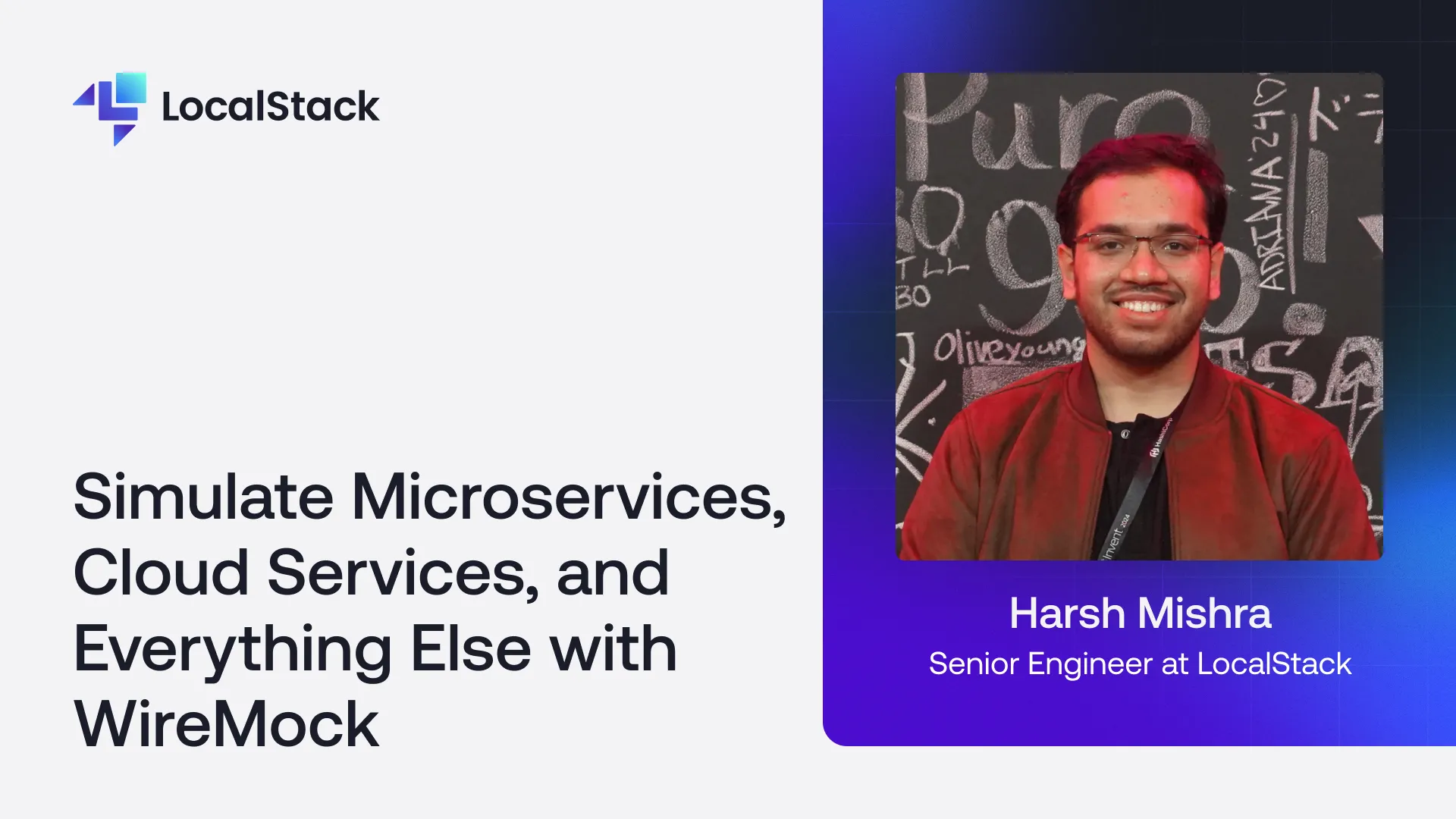
Cloud-first development kills your inner dev loop. There's a better way. TypeDB on AWS is powerful — Lambda functions querying complex relationship hierarchies, recursive schema functions resolving transitive memberships, all without application logic. But iterating on schemas and queries in the cloud is slow and expensive. Harsh Mishra introduces the TypeDB extension for LocalStack: run a fully functional TypeDB server inside your local AWS environment and connect your app exactly as you would in production. Faster iteration, zero unnecessary spend.
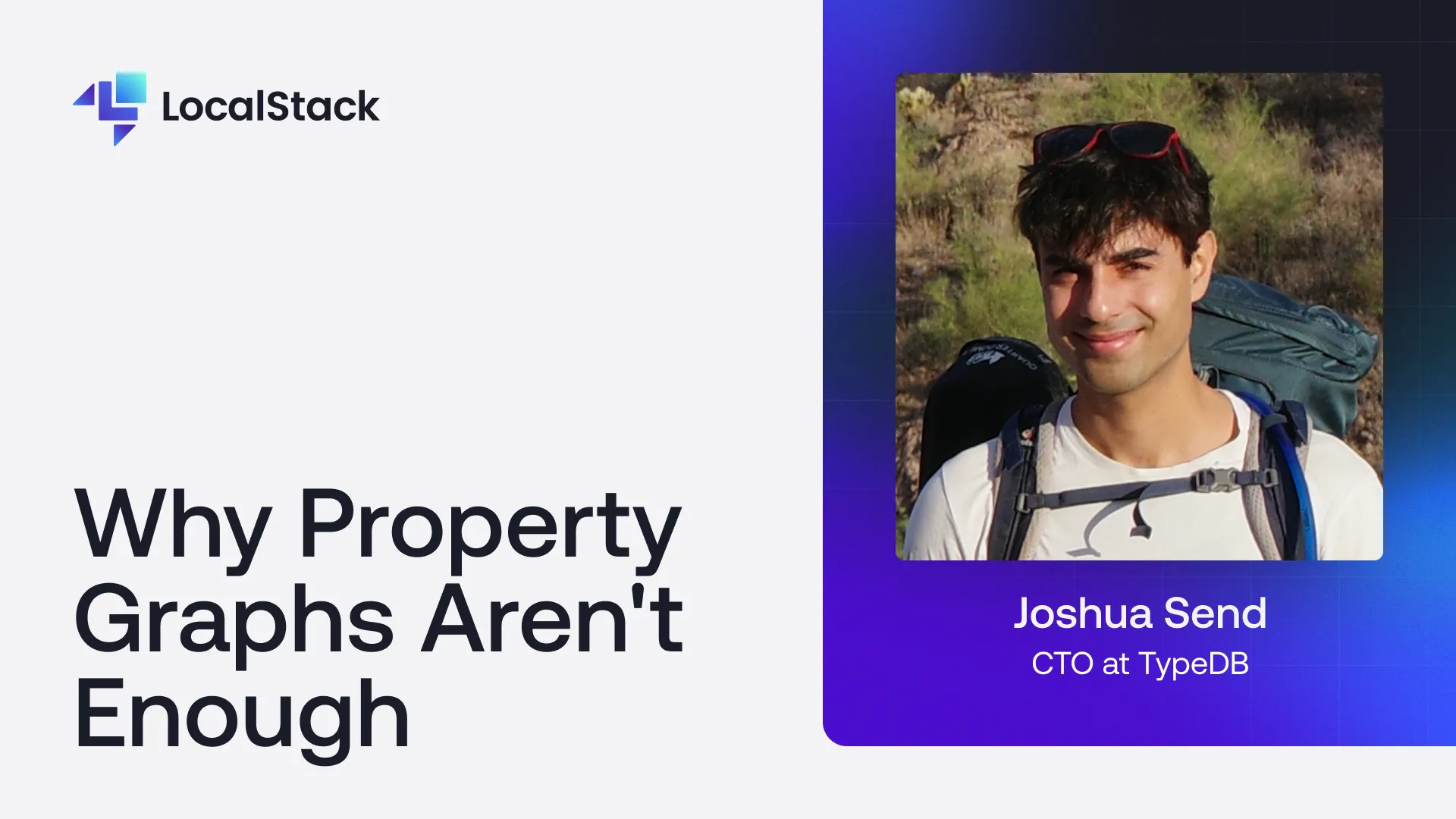
Are Property Graphs living up to the hype? Maybe the model itself is the problem. We made the move from relational databases to graph databases to escape "Join Pain" and model the real world more naturally — but for many engineering teams, that promise has curdled into something worse: the Spaghetti Graph. Complex queries. Ugly workarounds for multi-party relationships. Fragile schemas that shatter with every iteration and become a nightmare to maintain. The good news? The problem isn't your data. In this talk, Joshua Send breaks down why standard Labeled Property Graphs (LPGs) fall short when applied to complex domains — and introduces TypeDB, a strongly-typed database that brings together the connectivity of a graph with the integrity of a relational model. You'll come away understanding why LPGs struggle at scale and complexity, what "Spaghetti Graphs" are and how teams fall into the trap, how TypeDB's type system enforces data integrity without sacrificing flexibility, and when a strongly-typed graph database is the right tool for the job. Whether you're deep in a graph migration, evaluating database architectures, or just tired of schema chaos — this one's for you.
When it comes to productivity, developer experience is more than just a buzzword. Creating an intuitive developer experience could help you get more out of LocalStack by democratizing access, cutting out manual tasks, and making environments more easily interchangeable between LocalStack and AWS. On a day-to-day basis, this could mean fewer tickets, less time spent creating environments, and more time on the important work that your environments support. This demo session will show how LocalStack’s new integration with Quali Torque can accelerate deployment on both LocalStack and AWS by using generative AI to create reusable environment templates that can be deployed to LocalStack and AWS interchangeably in just a few clicks, providing a self-service catalog for your teams to find and provision environments quickly and easily without access to create or modify resource configurations, simplifying the deployment experience by eliminating complexity and security requirements to run environments on AWS, and tracking all activity to identify performance issues for LocalStack deployments and wasted cloud costs for AWS deployments proactively.
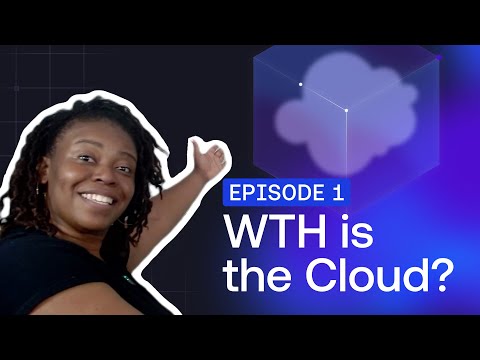
Most people think the cloud is just files floating in the sky. Spoiler: it's not. In this episode, I’m breaking down what “the cloud” really is, why everything you’ve been told is probably wrong, and why it's the engine behind everything from Netflix to AI to your online checkout. This is the kickoff to WTH is the Cloud?! a fun series that makes cloud technology make sense.
Launch yourself in the world of local cloud development
