
Upcoming Events
LocalStack is heading to The Cloud & AI Summit 2026, the community-driven conference for developers, architects, and technology leaders working with Azure and AI, running September 30 – October 2 at the Ameristar Casino & Convention Center in St. Charles, MO. Find our team to talk about local cloud development, faster Azure feedback loops, and giving every developer, AI agent, and pipeline a safe place to build and test. Then catch two sessions from Kiah Imani: one on fixing the Azure dev loop by running cloud architectures locally, and one on how developer experience needs to change now that AI agents are testing, debugging, and deploying code.
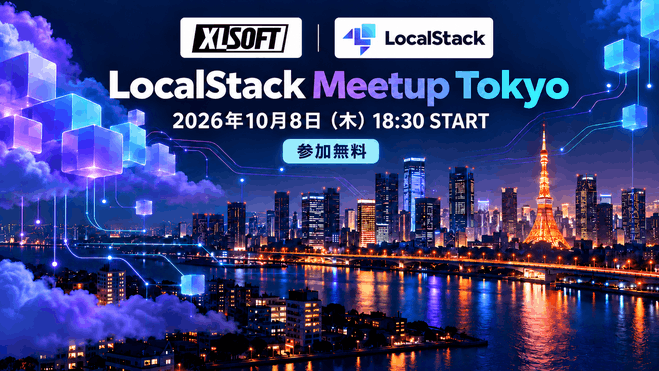
LocalStack co-founder and CTO Waldemar Hummer is coming to Tokyo. Join us on Thursday, October 8 for LocalStack Meetup Tokyo 2026, co-hosted with XLsoft, LocalStack's reseller partner in Japan, at the XLsoft Tokyo office in Mita, Minato-ku.
Developing on AWS shouldn't mean deploying to the cloud every time you want to see if something works. LocalStack lets you run AWS services on your own machine, so you can try out changes, run automated tests, and debug cloud applications without waiting on deployments or spending money on cloud resources.
At this meetup, Waldemar will talk about local AWS development and what it opens up for development with AI agents. Then LocalStack Champion Yoshiaki Yoshida (@kakakakakku) will share local cloud development patterns from a community perspective. Stay afterwards for networking with other developers and members of the AWS community.
Who should attend
- Developers building and testing applications on AWS
- Anyone who wants to develop locally instead of waiting on cloud deployments
- Teams looking to get more out of LocalStack
- Developers interested in building with AI agents
- Anyone who wants to meet other developers and the AWS community in Tokyo
Agenda
- Welcome and introduction to XLsoft
- AWS development in local environments: built for humans, ready for agents (Waldemar Hummer, Co-founder and CTO, LocalStack)
- Local cloud development patterns: a community perspective (Yoshiaki Yoshida, LocalStack Champion)
- Networking and social
Event details
- Date: Thursday, October 8, 2026, 18:30–20:30 JST (doors open 18:00)
- Venue: XLsoft Tokyo Office, Mita, Minato-ku, Tokyo
- Admission: Free, registration required
- Light food and drinks provided
Register for free on connpass. Content and agenda may change without notice.
LocalStack is heading to Web Unleashed 2026, FITC's front-end and web development conference in Toronto, running October 27–28 at Humber IGS. Stop by to talk local AWS development and cloud-native testing with our team, and catch our session on keeping AI coding agents safe and cost-effective in AWS serverless environments.
Have a talk idea?
Do you want to present at our events? We are not just limited to LocalStack—Talks around AWS, Developer Productivity, Cloud Security, DevOps toolings, Development & Testing loops, Snowflake and more would add great value to our members. Fill out the form to propose your talk at one of our Community Events
Previous Talks
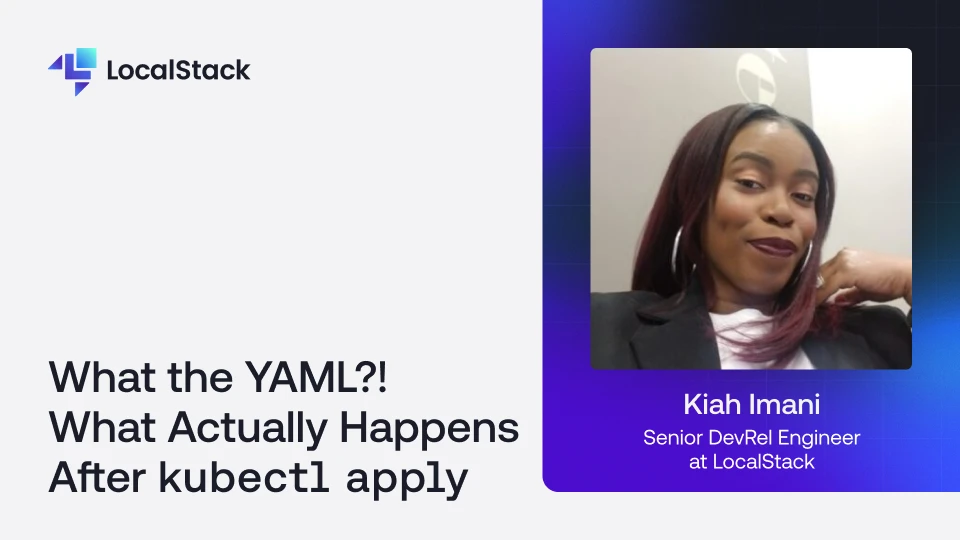
Developers are used to running kubectl apply and waiting on the magic to happen resulting in a running Kubernetes pod. But what actually happens between entering the command and the deployment being ready? What's the reality behind the "magic"? In this talk, Kiah will dissect all the stages of a Kubernetes deployment in a way that is easy to understand. She'll walk through that deployment happening locally on LocalStack to inspect what's really going on at each stage. At the end of this session, attendees will have a deeper understanding of the Kubernetes deployment process that can help debug many common issues and will gain an understanding of how LocalStack enables local testing of Kubernetes.
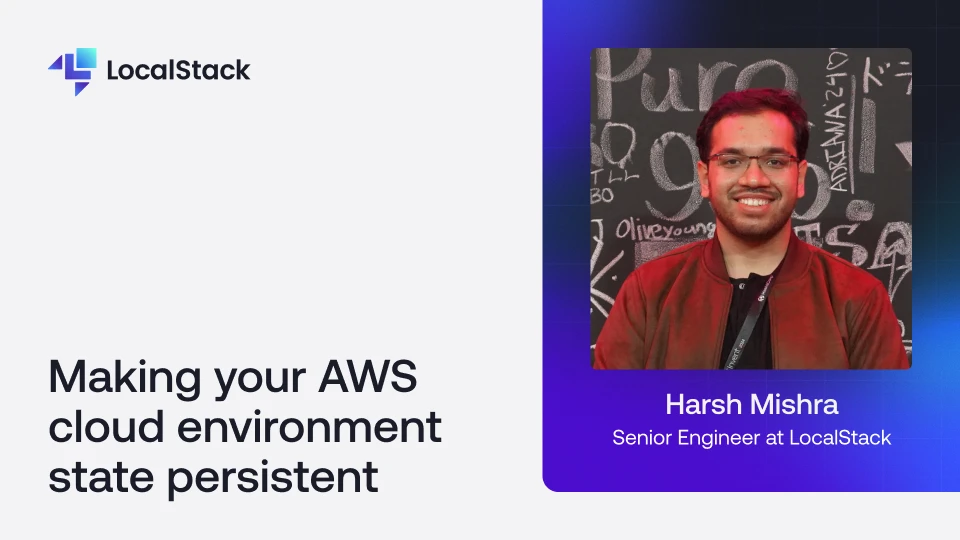
Recreating the unique state of a cloud app environment is notoriously complex, making it difficult to diagnose bugs, collaborate with teammates, or even just pick up where you left off. Join us as we deep dive into LocalStack’s powerful state management and persistence features, exploring how to maintain, snapshot, and seamlessly share your local cloud environments using core features like persistence, Cloud Pods, and state files. Learn how to restore a previous state, share preconfigured environments with colleagues for collaboration or onboarding, or restore preset services and data for functional tests in CI. We'll also showcase LocalStack's new Model Context Protocol (MCP) integration, revealing how AI can manage, inspect, and automate your local cloud state.
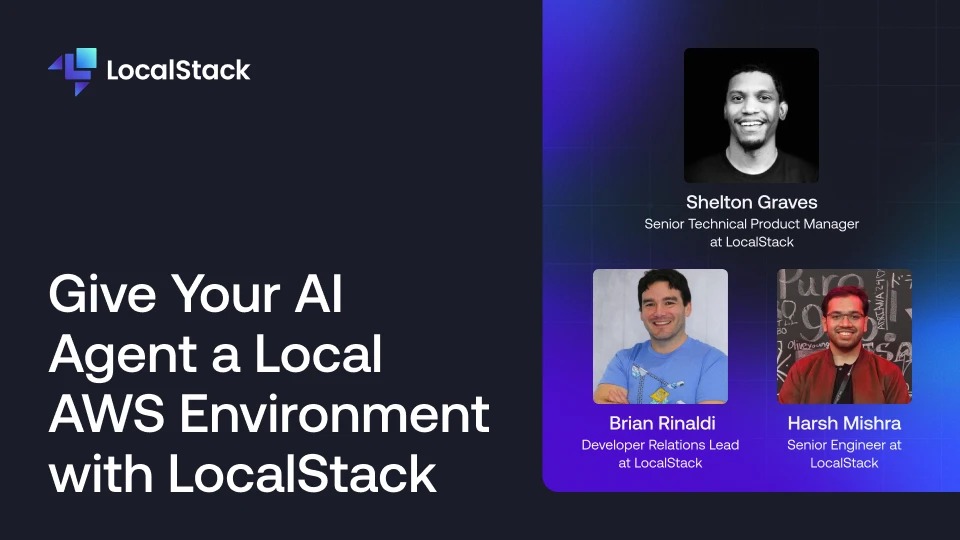
An agent will write you a CDK stack, a Terraform module, or a stack of IAM policies in seconds.
Whether any of it works is a separate question, and the usual way to find out is to deploy to a real AWS account and watch what breaks.
In an agentic workflow, that means giving AI access to a public cloud account, racking up costs on the AWS bill, and waiting for provisioning to complete every time you push new code to the environment.
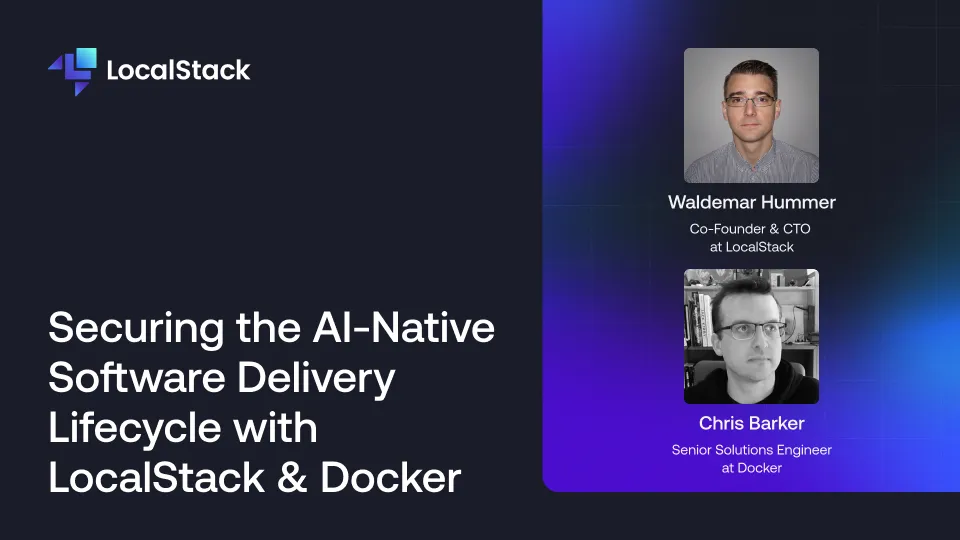
The rise of agentic AI in the software delivery lifecycle creates a dilemma with high-stakes implications.
As agents create new applications at an unprecedented rate, how do you integrate security without slowing down delivery?

You've been there: Lambda triggers, SQS messages fly, Step Functions execute, and somewhere in the middle, something breaks. You have no idea what triggered what, what payload was passed, or where it all went wrong.
That's the black box problem of AWS development.
Once your architecture grows beyond a single service, visibility disappears fast. You're left stitching together scattered logs and redeploying just to see what's going on.
App Inspector is LocalStack's built-in observability layer that opens up that black box. It gives you a real-time, unified view of every service interaction happening inside your local cloud: what triggered what, with what payload, in what order.
In this talk, we'll walk through what App Inspector is, how it fits into your LocalStack workflow, and how to use it to catch bugs locally before they ever reach staging or production.

You’ve been there: Your Unit tests pass both locally and in CI. You deploy with confidence. You thought.. Then staging in the real cloud reveals the truth—bugs that only show up with actual RDS parameter settings, real SQS and SNS throughput limits, or Lambda and API Gateway behaviour your local mocks never captured.
The solution is Testcontainers.
Testcontainers is a testing library that provides easy and lightweight APIs for bootstrapping integration tests with real services wrapped in Docker containers. Using Testcontainers, you can write tests talking to the same type of services you use in production without mocks or in-memory services. Spin them up, run migrations, execute your Node.js service against them, assert results, auto-cleanup.
Launch yourself in the world of local cloud development
