
LocalStack Resource Library
Explore the LocalStack Resource Library to unlock the full potential of local cloud development. From quick-start tutorials and deep-dive technical guides to best practices and webinars, we've gathered all the insights you need to build, test, and scale your cloud applications seamlessly.
Browse by Category
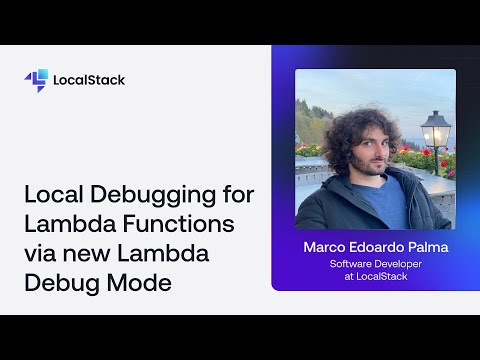
Debugging serverless functions has always been challenging, often requiring repeated invocations, extensive log tracing, and cloud deployments to diagnose an issue. The new Lambda Debug Mode in LocalStack changes this by allowing developers to debug AWS Lambda functions directly in their IDE, with breakpoints, variable inspection, and step-through execution, without leaving their local environment. In this presentation, Marco Edoardo Palma provides a hands-on demo of Lambda Debug Mode—from debugging standalone functions to handling multi-function workflows. Learn how this developer-first approach makes debugging serverless applications faster, smoother, and more intuitive.

Ever wish you could test your whole cloud app without touching the cloud? I’ll show you how to validate your serverless pipeline from start to finish, right on your laptop using LocalStack. Join our Slack community and start shipping with confidence.
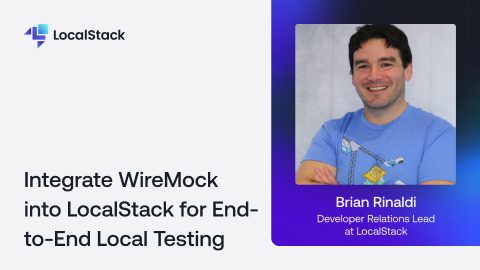
In this live session, Brian from LocalStack will demonstrate the WireMock extension for LocalStack, showing how developers can achieve end-to-end local testing by combining AWS service emulation with external API mocking. Brian will walk through real-world use cases, demonstrate the integration in action, and explain how this unified approach simplifies testing complex cloud applications that depend on both AWS services and third-party APIs.
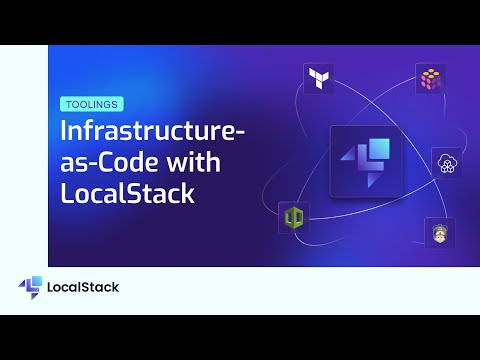
Infrastructure-as-Code refers to the practice of defining and provisioning cloud resources using code and automation scripts, thus eliminating the need for manual configurations. With frameworks like AWS CloudFormation, AWS CDK (Cloud Development Kit), AWS Serverless Application Model (SAM), Pulumi, and Terraform, users can specify their desired infrastructure state in code, enabling rapid and consistent deployment of resources. However, as with any code, IaC scripts require thorough testing to ensure their correctness and proper functionality. Traditional cloud environments for testing can be expensive, slow, and error-prone due to complexities in provisioning and configuration. With LocalStack, you can leverage a local emulation of various cloud services, such as S3, DynamoDB, EKS, and more! LocalStack simulates these cloud services on a developer's machine, allowing for comprehensive and efficient testing of IaC scripts before deployment to actual cloud environments. In this video, we explain how you can use LocalStack to be more efficient and cost-effective at testing these major IaC frameworks: Terraform, Pulumi, Cloud Development Kit, CloudFormation, and Serverless Application Model. As organizations will continue to embrace IaC, cloud emulation framework like LocalStack will play an increasingly vital role in ensuring the quality and robustness of cloud infrastructure implementations.
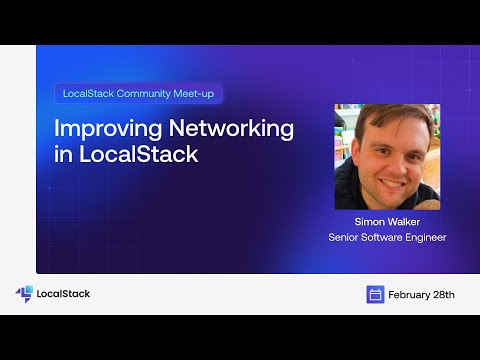
Connecting your applications to LocalStack has not always been easy. In this video, Simon from the LocalStack team discusses how we streamlined the LocalStack networking experience. We discussed the challenges of connecting your applications to LocalStack and how we're simplifying the LocalStack networking experience. Simon also discussed about configurations required for more complex networking setups, and some common networking scenarios, with example configuration for achieving connectivity.
LocalStack integrates with official AWS Software Development Kits (SDKs) so you can connect to LocalStack services using the same application code you use for AWS services. This lets you develop and test your applications locally without connecting to the cloud. In this video, we will talk about how you can connect to LocalStack emulated services using AWS SDKs.
LocalStack is ephemeral, so when you stop and restart it, all data is lost. You can use certain features to save the state & load it back when you restart LocalStack. This includes saving the local state for S3 buckets, DynamoDB tables, RDS databases and more. In this video, we explore three mechanisms that allow you to save state in LocalStack: persistence, state export and import, and Cloud Pods.
In this video, you'll learn how to set up and integrate LocalStack's Snowflake Emulator to develop and test your Snowflake data apps in your local environment or CI pipelines. Whether you're using Snowpark, various client libraries, or building interactive data apps with frameworks like Streamlit, this emulator simplifies your developer experience. We'll walk you through step-by-step instructions on installing the Snowflake emulator with the LocalStack CLI & Docker, configuring and integrating the emulator with popular SQL clients, such as DBeaver, and running SQL queries locally to replicate a full Snowflake environment without cloud dependencies. ⚡ Get early access! The Snowflake Emulator is currently in public preview—reach out to us for access and start building today!
Real cloud developers aren’t pushing straight to AWS. They’re building and testing everything locally before a single deploy goes live. This episode breaks down the modern cloud dev workflow and how tools like LocalStack make it possible to move fast without burning money (or trust). Learn how local-first dev culture is changing the cloud game.
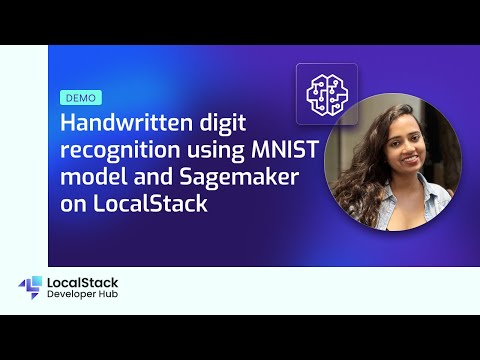
LocalStack Applications in Developer Hub provides sample templates to help LocalStack users adopt real-world scenarios to rapidly and conveniently create, configure, and deploy applications locally.
Getting started
In this demo, we will setup a Sagemaker on Localstack
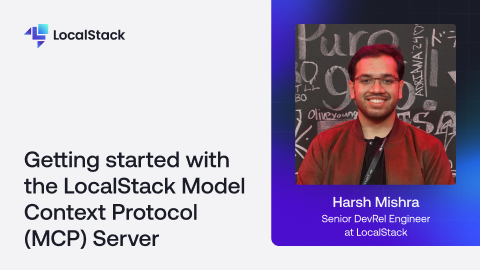
What if your AI coding assistant could not only write infrastructure code, but also deploy it, test it, and fix issues automatically — all on your local machine? That's exactly what the LocalStack MCP Server makes possible. In this session, we'll introduce the LocalStack Model Context Protocol (MCP) Server, a new tool that lets AI agents manage your entire local cloud development lifecycle through a conversational interface. You'll learn what MCP is and why it's a game-changer for AI-assisted development, how the LocalStack MCP Server turns manual cloud tasks into automated workflows, how to set up and configure the server with your favorite AI editor (Cursor, VS Code, etc.), and real-world demos: deploying CDK apps, analyzing logs, running chaos tests, managing state with Cloud Pods, and more. Through hands-on examples, we'll walk through a complete workflow where an AI agent deploys a serverless application, verifies resources, troubleshoots issues, and tests resilience, all without leaving the conversation. If you've ever wished your AI assistant could do more than just generate code, this talk will show you what's possible when agents can actually manage your local cloud environment.
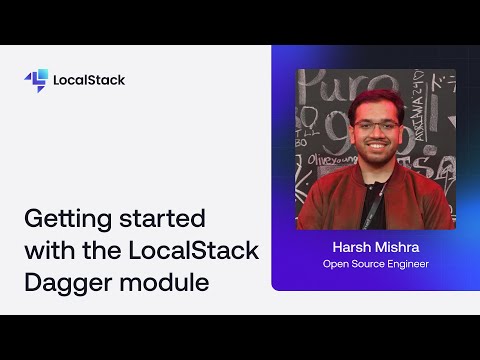
Looking to bring AWS emulation directly into your CI/CD pipelines? This hands-on session with Harsh Mishra shows you how to integrate LocalStack with Dagger to level up your development workflows. In this session, you'll learn how to run full AWS emulation locally inside Dagger pipelines, spin up LocalStack as a service using Dagger’s composable syntax, use Cloud Pods for persistent state across pipeline runs, and create ephemeral environments for fast, clean, isolated testing. Keep your cloud workflows repeatable, testable, and fast. Whether you’re building serverless apps, managing infrastructure-as-code, or optimizing your DevOps pipelines, this talk will help you bring LocalStack into the heart of your CI/CD setup.
