Local cloud development events: meetups, webinars & conferences
Join LocalStack at conferences, live webinars and community meetups on local cloud development and AI agents, or watch past talks on demand
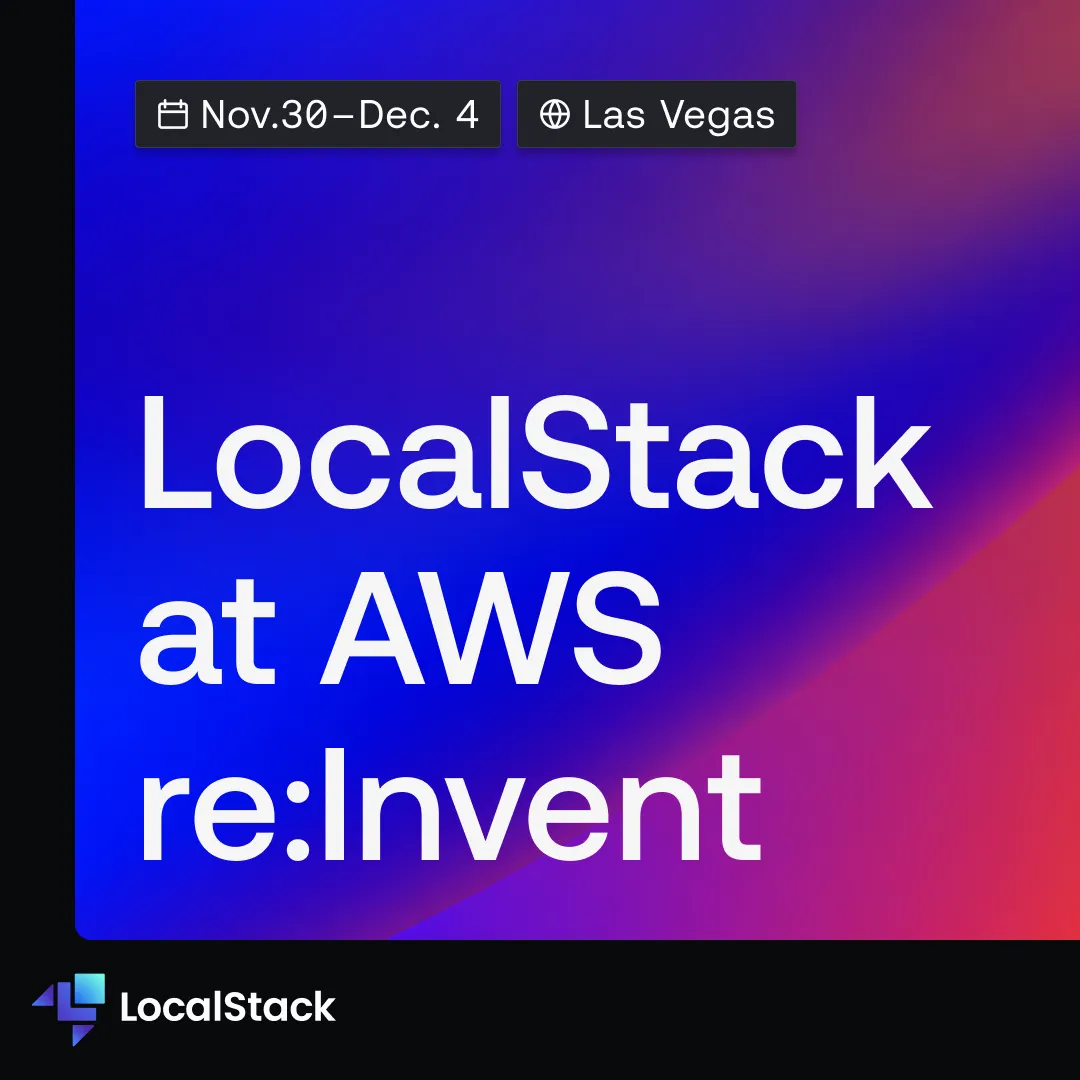
LocalStack at AWS re:Invent 2026
Meet LocalStack at AWS re:Invent 2026 in Las Vegas
Upcoming Events
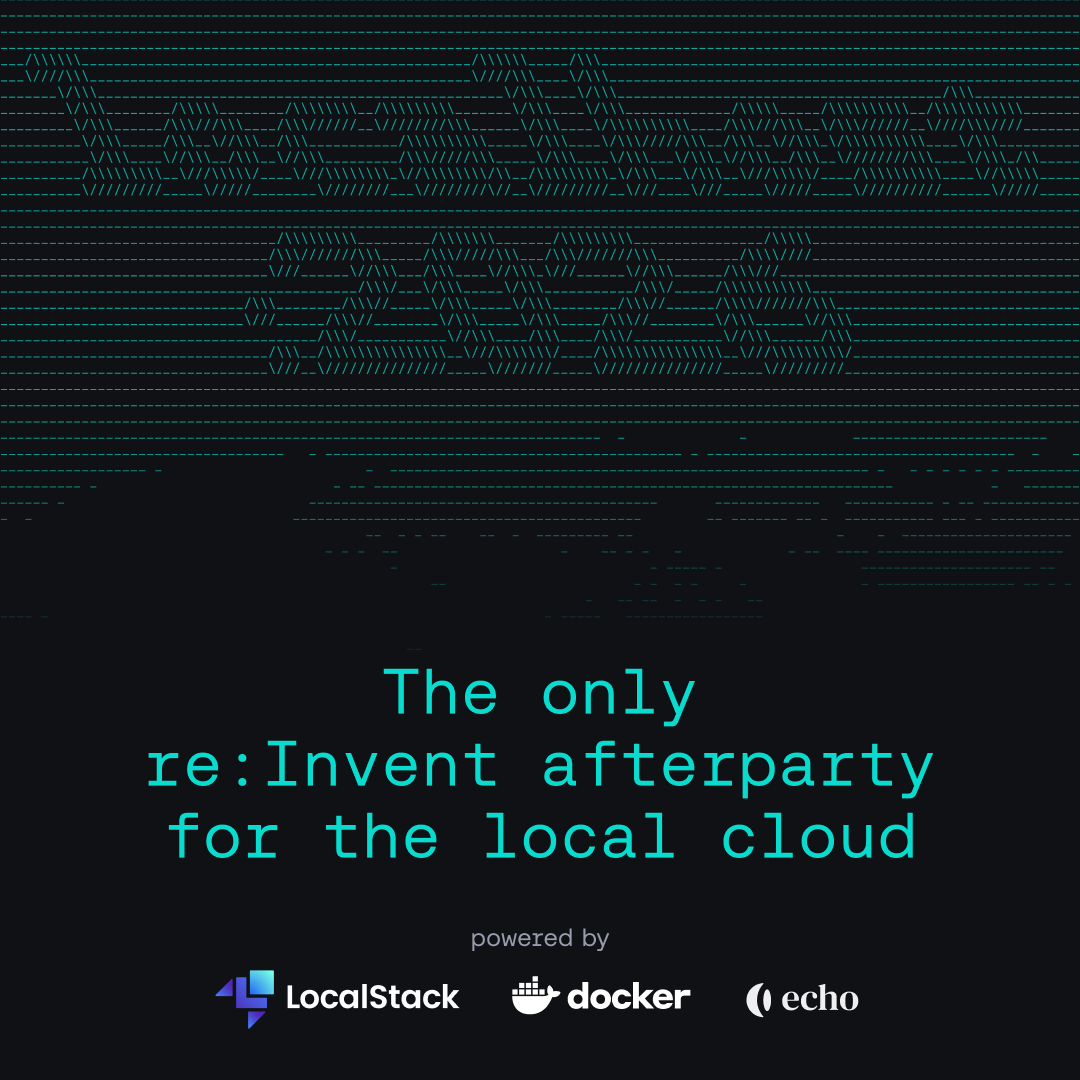
localhost:2026 – The only re:Invent afterparty for the local cloud
localhost:2026: LocalStack's AWS re:Invent afterparty for the local cloud community
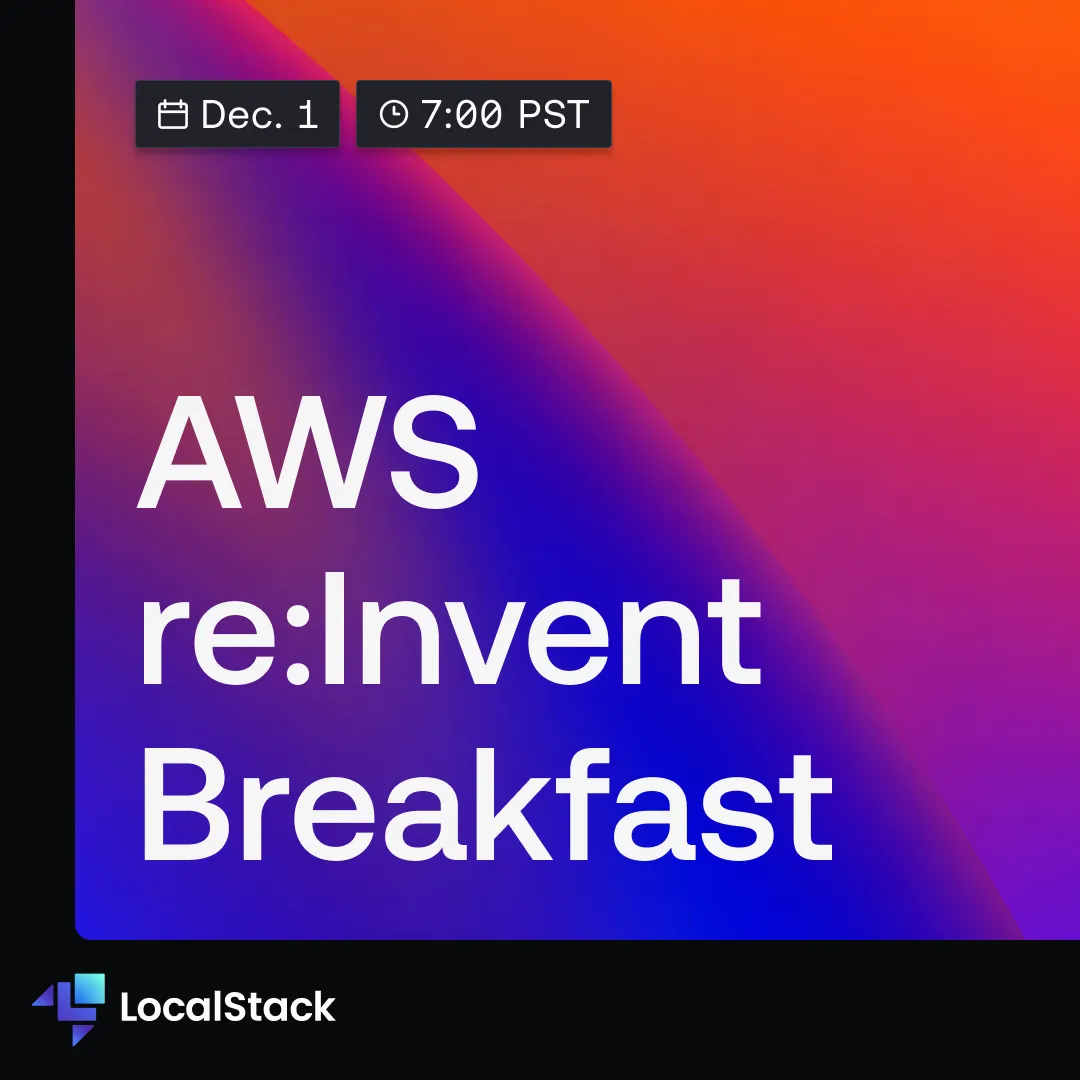
Watch the AWS re:Invent keynote in comfort at LocalStack’s customer breakfast
A private LocalStack breakfast and AWS re:Invent keynote livestream for our community
LocalStack at AWS re:Invent 2026
Meet LocalStack at AWS re:Invent 2026 in Las Vegas
Executive Briefing: State of AI in Cloud Development 2026
Executive briefing: what enterprise developers really think about AI agents, AI-generated code, and cloud development in 2026
LocalStack at Web Unleashed 2026 (FITC)
LocalStack is heading to Web Unleashed 2026
Introducing AWS Lambda Web Functions: Deep Dive with AWS
AWS and LocalStack, live: what Lambda Web Functions are, and how to test them locally first
Serverlesspresso: Building a Scalable and Secure Retail Application
Online Workshop Serverlesspresso: Building a Scalable and Secure Retail Application with LocalStack
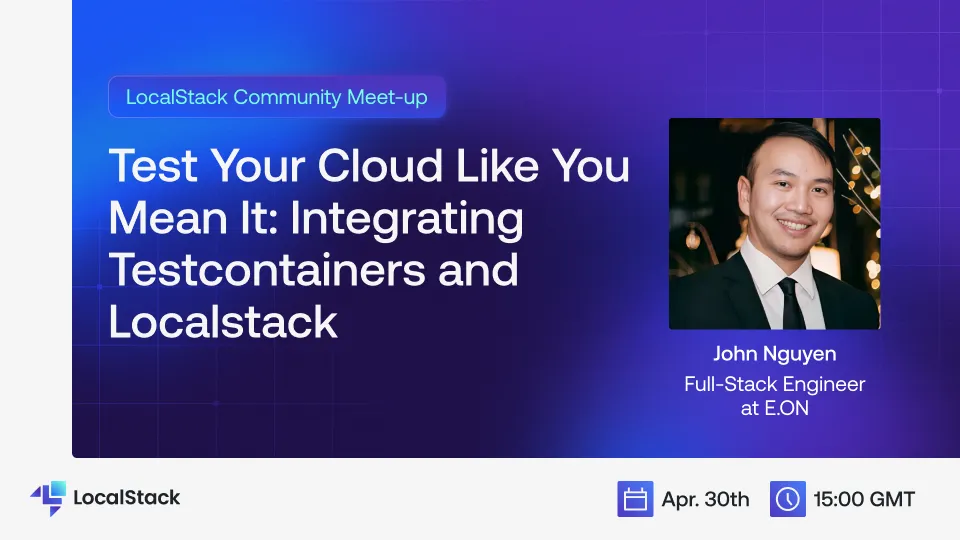
Test Your Cloud Like You Mean It: Integrating Testcontainers and LocalStack
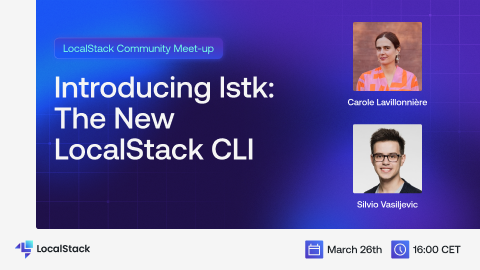
Introducing lstk: The New LocalStack CLI
A Live Demo and Architectural Deep Dive into LocalStack's New Go CLI
No events match these filters yet. Try another filter or check back soon.
Speak at a LocalStack event
AWS, developer productivity, cloud security, DevOps, testing, Snowflake and more. Propose a talk for a meetup or webinar.
Never miss an event
Get new events and recordings by email, or subscribe to the calendar.
Watch on demand
Catch up on past LocalStack talks, webinars and meetups on local cloud development and AI agents.

You've been there: Lambda triggers, SQS messages fly, Step Functions execute, and somewhere in the middle, something breaks. You have no idea what triggered what, what payload was passed, or where it all went wrong. That's the black box problem of AWS development. Once your architecture grows beyond a single service, visibility disappears fast. You're left stitching together scattered logs and redeploying just to see what's going on. App Inspector is LocalStack's built-in observability layer that opens up that black box. It gives you a real-time, unified view of every service interaction happening inside your local cloud: what triggered what, with what payload, in what order. In this talk, we'll walk through what App Inspector is, how it fits into your LocalStack workflow, and how to use it to catch bugs locally before they ever reach staging or production.

You’ve been there: Your Unit tests pass both locally and in CI. You deploy with confidence. You thought.. Then staging in the real cloud reveals the truth—bugs that only show up with actual RDS parameter settings, real SQS and SNS throughput limits, or Lambda and API Gateway behaviour your local mocks never captured. The solution is Testcontainers. Testcontainers is a testing library that provides easy and lightweight APIs for bootstrapping integration tests with real services wrapped in Docker containers. Using Testcontainers, you can write tests talking to the same type of services you use in production without mocks or in-memory services. Spin them up, run migrations, execute your Node.js service against them, assert results, auto-cleanup.
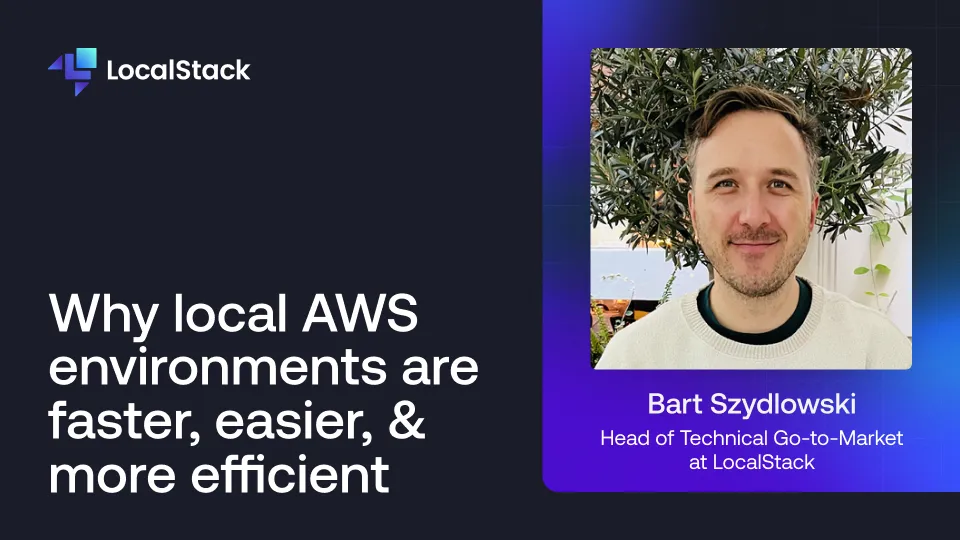
So many of the challenges that slow down software development stem from the fact that early-stage dev & test cycles are performed in cloud environments. Local cloud development removes these challenges. By simulating AWS application behavior in a local container, the local cloud enables developers and agents to validate the security, quality, and reliability of their applications faster and more effectively than they can on the cloud.
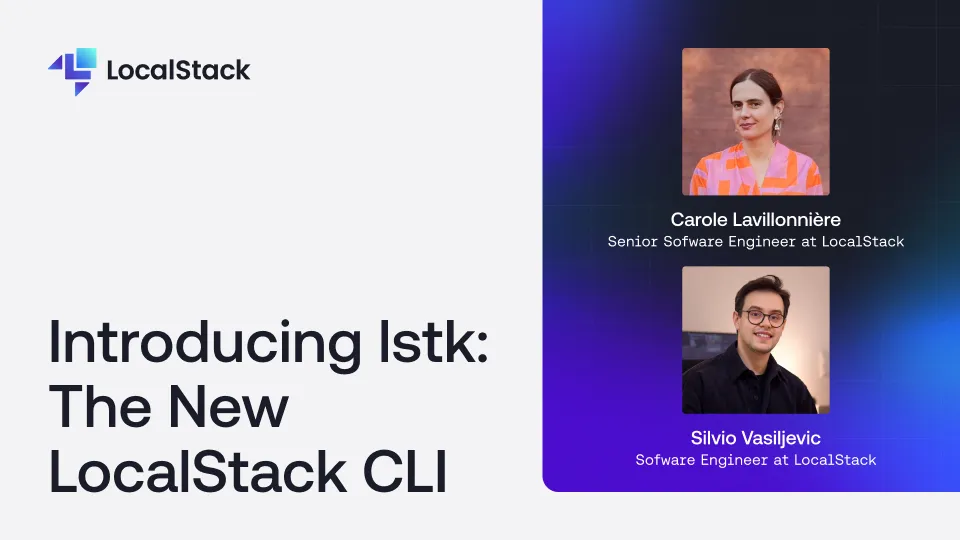
Silvio and Carole introduce lstk, LocalStack's next-generation CLI built from scratch in Go. They explain why the team rebuilt the CLI, walk through its key features — zero-config startup, seamless browser-based authentication, and a rich interactive TUI that surfaces real-time progress and actionable errors — and demo how lstk gets you from install to a running emulator in seconds. They also dive into the architecture behind lstk and how it is designed to support multiple emulators, flexible runtimes, and deep integrations with CI pipelines and IDEs.
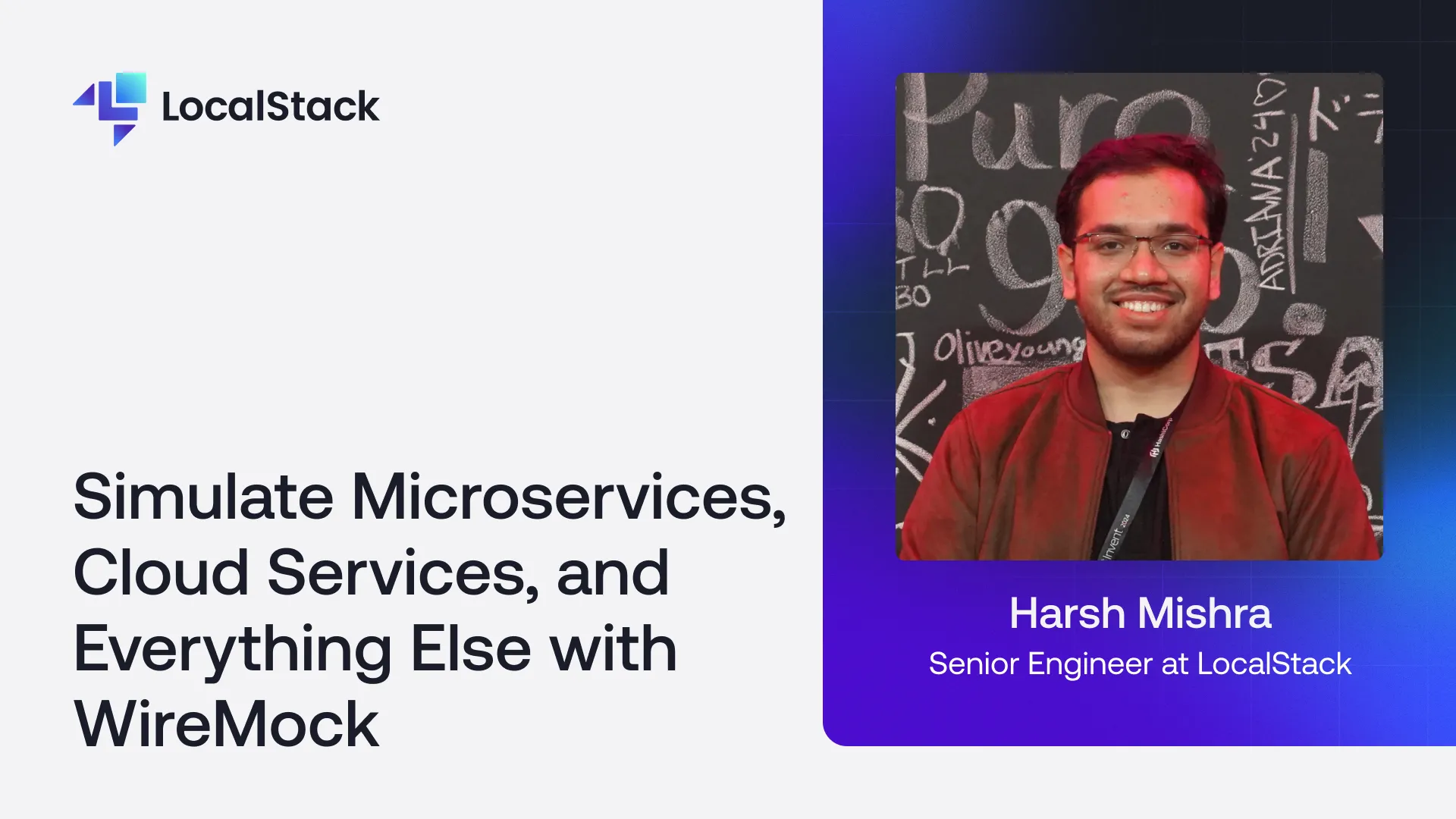
Cloud-first development kills your inner dev loop. There's a better way.TypeDB on AWS is powerful — Lambda functions querying complex relationship hierarchies, recursive schema functions resolving transitive memberships, all without application logic. But iterating on schemas and queries in the cloud is slow and expensive.Harsh Mishra introduces the TypeDB extension for LocalStack: run a fully functional TypeDB server inside your local AWS environment and connect your app exactly as you would in production. Faster iteration, zero unnecessary spend.
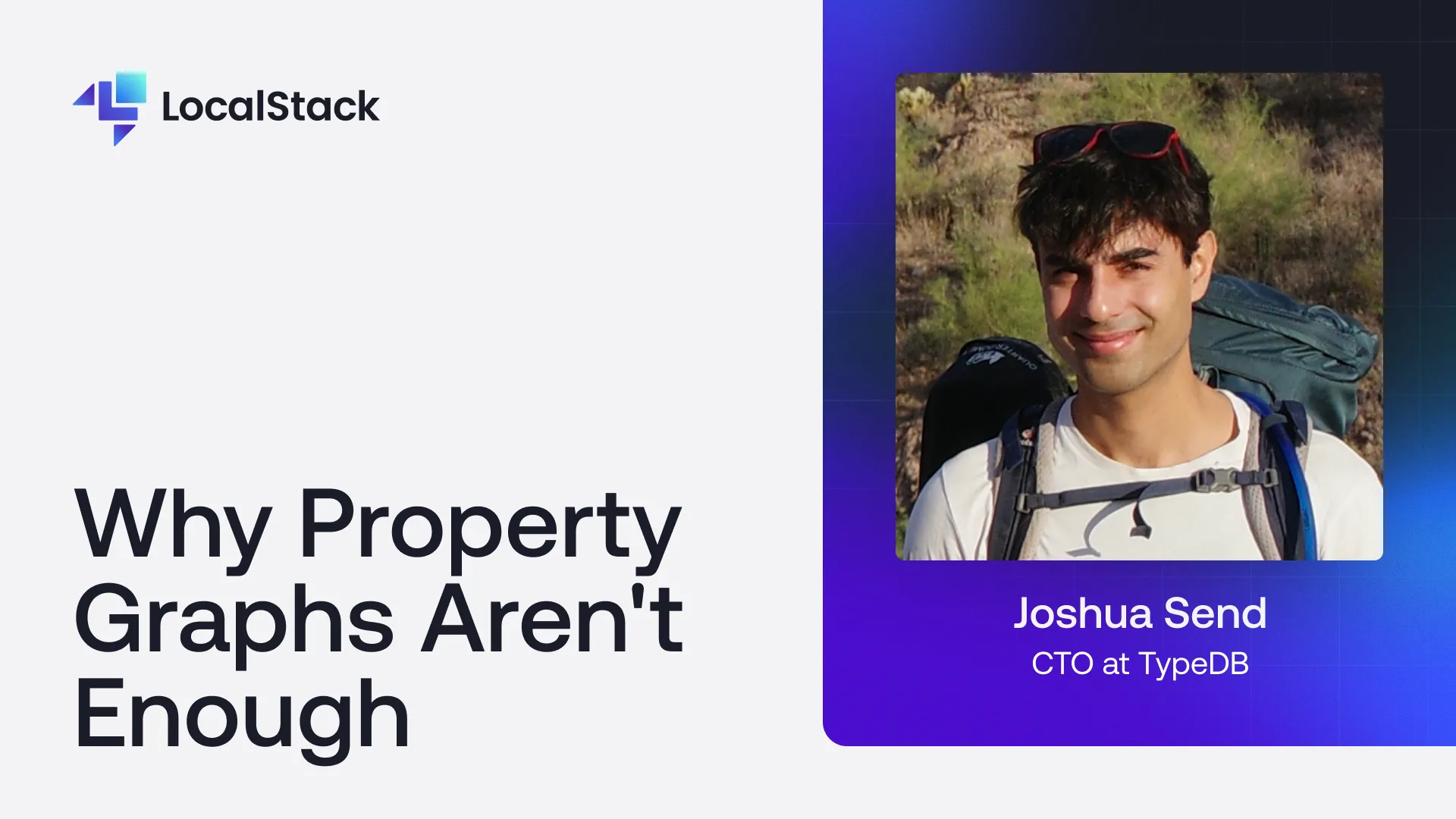
Are Property Graphs living up to the hype? Maybe the model itself is the problem.We made the move from relational databases to graph databases to escape "Join Pain" and model the real world more naturally — but for many engineering teams, that promise has curdled into something worse: the Spaghetti Graph.Complex queries. Ugly workarounds for multi-party relationships. Fragile schemas that shatter with every iteration and become a nightmare to maintain.The good news? The problem isn't your data.In this talk, Joshua Send breaks down why standard Labeled Property Graphs (LPGs) fall short when applied to complex domains — and introduces TypeDB, a strongly-typed database that brings together the connectivity of a graph with the integrity of a relational model.You'll come away understanding:Why LPGs struggle at scale and complexityWhat "Spaghetti Graphs" are and how teams fall into the trapHow TypeDB's type system enforces data integrity without sacrificing flexibilityWhen a strongly-typed graph database is the right tool for the jobWhether you're deep in a graph migration, evaluating database architectures, or just tired of schema chaos — this one's for you.