Why Property Graphs Aren't Enough

Are Property Graphs living up to the hype? Maybe the model itself is the problem. We made the move from relational databases to graph databases to escape "Join Pain" and model the real world more naturally — but for many engineering teams, that promise has curdled into something worse: the Spaghetti Graph. Complex queries. Ugly workarounds for multi-party relationships. Fragile schemas that shatter with every iteration and become a nightmare to maintain. The good news? The problem isn't your data. In this talk, Joshua Send breaks down why standard Labeled Property Graphs (LPGs) fall short when applied to complex domains — and introduces TypeDB, a strongly-typed database that brings together the connectivity of a graph with the integrity of a relational model. You'll come away understanding why LPGs struggle at scale and complexity, what "Spaghetti Graphs" are and how teams fall into the trap, how TypeDB's type system enforces data integrity without sacrificing flexibility, and when a strongly-typed graph database is the right tool for the job. Whether you're deep in a graph migration, evaluating database architectures, or just tired of schema chaos — this one's for you.

Related Talks

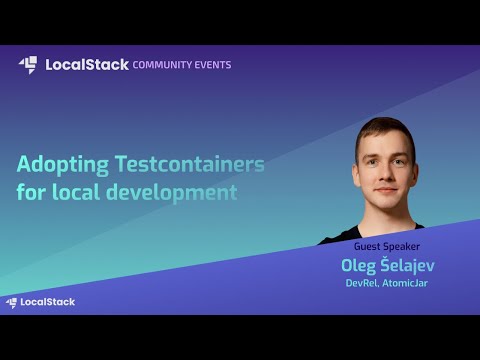
Adopting Testcontainers for local development

Local development and testing are significant for engineers who wish to ship confidently onto production environments. Test-driven development (TDD) has been adopted as an essential practice to enforce that and ensure that every code change is validated locally and on CI. This is where we arrive at the Testcontainers libraries that support your tests, providing lightweight, ephemeral instances of common databases, message brokers, web browsers, or anything else that can run in a Docker container. With Testcontainers, available in different popular languages: Java, Go, .NET, JavaScript/Typescript, and Python, you can replicate the production environment on your local machine and test everything (including AWS APIs powered by LocalStack)! Testcontainers ensure that the data access layer, user interface, and application are tested well at each step. In this session, we have looked at Testcontainers and how to adopt them to develop our applications locally and run our integration tests while using LocalStack to provision cloud resources inside a Docker container before pushing your application to production! In the end, we have also discussed how LocalStack and the Java version of Testcontainers play nicely with each other and wind up with updates about the all-new LocalStack release!

Learn More
Learn More

Launch yourself in the world of local cloud development

Try for free
Try for free
Talk to Sales
Talk to Sales