Running an EC2 instance locally using LocalStack

In this video, you'll learn how you can run an Elastic Compute Cloud (EC2) instance locally using LocalStack's core cloud emulator. Elastic Compute Cloud (EC2) is a core service within Amazon Web Services (AWS) that provides scalable and flexible virtual computing resources. EC2 enables users to launch and manage virtual servers, commonly referred to as instances. LocalStack is a core cloud emulator that allows you run EC2 instances using a Docker backend. Under the hood, LocalStack spins another Docker container that mimics an EC2 instance functionality, including other add-on features such as EBS, IMDS, and Load Balancers. Corrections: LocalStack will no longer provide the Ubuntu 20.04 Docker AMI (used in this video) by default in the next major release, though it can still be manually added, and on nine minutes & nine seconds mark, we meant 'localhost' instead of 'localstack'. To access the web server, you can hit the localhost:8000 endpoint as shown in the video.

Related Talks

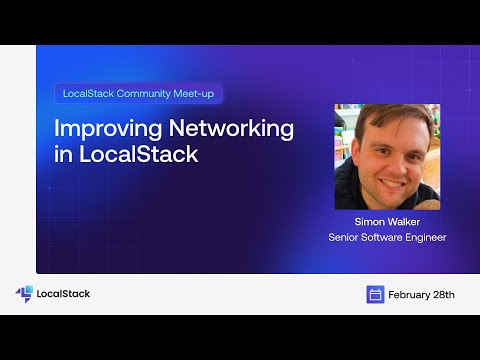
Improving Networking in LocalStack

Connecting your applications to LocalStack has not always been easy. In this video, Simon from the LocalStack team discusses how we streamlined the LocalStack networking experience. We discussed the challenges of connecting your applications to LocalStack and how we're simplifying the LocalStack networking experience. Simon also discussed about configurations required for more complex networking setups, and some common networking scenarios, with example configuration for achieving connectivity.
Learn More
Learn More
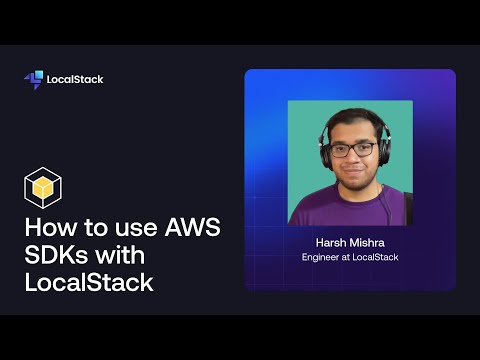
How to use AWS SDKs with LocalStack

LocalStack integrates with official AWS Software Development Kits (SDKs) so you can connect to LocalStack services using the same application code you use for AWS services. This lets you develop and test your applications locally without connecting to the cloud. In this video, we will talk about how you can connect to LocalStack emulated services using AWS SDKs.

Learn More
Learn More
How to save state in LocalStack?

LocalStack is ephemeral, so when you stop and restart it, all data is lost. You can use certain features to save the state & load it back when you restart LocalStack. This includes saving the local state for S3 buckets, DynamoDB tables, RDS databases and more. In this video, we explore three mechanisms that allow you to save state in LocalStack: persistence, state export and import, and Cloud Pods.

Learn More
Learn More

Launch yourself in the world of local cloud development

Try for free
Try for free
Talk to Sales
Talk to Sales