From DevOps to MLOps: Scaling ML models to 2 Million+ requests per day

The challenge with Machine Learning (ML) models is productionizing. It requires data ingestion, data preparation, model training, model deployment, and monitoring. Adopting MLOps practices is similar to DevOps practices. In MLOps, the workload changes, but some core principles like automation, continuous integration/continuous deployment (CI/CD), and monitoring. Taking DevOps practices, I will discuss the similarities and differences in adopting MLOps practices. In this talk, Chinmay takes a production use case to scale ML models to 2 million+ daily requests. It leverages Google Cloud's (GCP) infrastructure to use its GPU and other services. This talk will help you draw similarities between DevOps and MLOps as a DevOps practitioner and help you learn how to run Machine Learning models at the production scale with best practices.

Related Talks

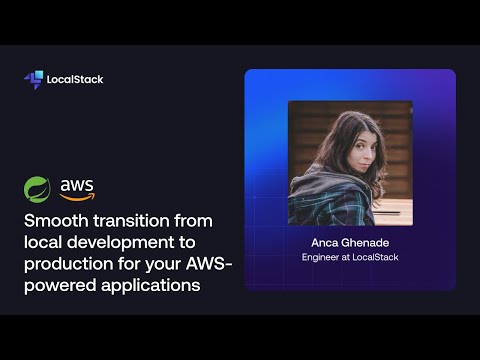
Smooth transition from local development to production for your AWS-powered applications

Running your Spring Boot app on AWS for production is common, but testing there can be slow and costly. In this video, we’ll show you how to speed up development using LocalStack. By provisioning your infrastructure with Terraform, you can easily switch to local testing in just three steps: configure your dev environment variables, start LocalStack in Docker, and run your IaC files. Get faster feedback and reduce costs by testing locally with LocalStack!
Learn More
Learn More
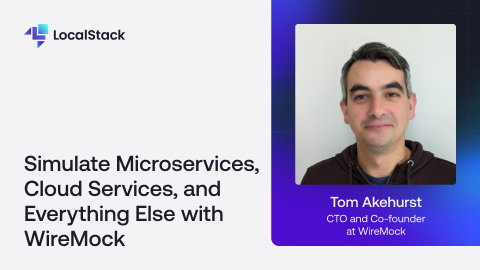
Simulate Microservices, Cloud Services, and Everything Else with WireMock & LocalStack

In this live session, WireMock CTO Tom Akehurst will introduce hybrid API simulation (local + cloud) with WireMock Runner. Tom will explain why we built Runner, how developers are using it today, and how it fits into modern dev and test workflows - such as simulating APIs during testing, prototyping, and AI-native development.

Learn More
Learn More
Simulating outages with LocalStack Chaos API

LocalStack Chaos API enables you to simulate outages in any AWS region or service. Chaos API provides an easy way to implement chaos engineering experiments to test a wide variety of simulated outages and failures within your application safely, without impacting your production users. Common examples can include region-wide outages, DNS failovers, service failures, and network faults. All the testing scenarios described above can be executed within LocalStack, providing thorough coverage for critical situations in a matter of minutes rather than hours or days. In this presentation by Viren Nadkarni, we explore how Chaos API is leveraged to perform service failures in a local environment while using robust error handling to address and mitigate such issues.

Learn More
Learn More

Launch yourself in the world of local cloud development

Try for free
Try for free
Talk to Sales
Talk to Sales